
$19.99
$12.99
35% Off
iVCS3
apeSoft

About the App
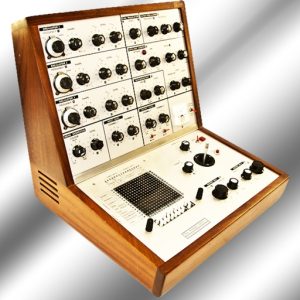
The iVCS3 is an official emulator of the EMS VCS3, a groundbreaking synthesizer created in 1969 by Peter Zinovieff's EMS company. The design of the VCS3 was largely credited to David Cockerell, while its striking look was crafted by the electronic composer Tristram Cary. The VCS3 was one of the first portable synthesizers, housed within a compact wooden case.
This synthesizer gained immense popularity among progressive rock bands. It found its way into recordings by various artists, including The Alan Parsons Project, Jean Michel Jarre, Hawkwind, Brian Eno (who worked with Roxy Music), King Crimson, The Who, Gong, and Pink Floyd. For instance, the iconic track "Won't Get Fooled Again" by The Who featured the VCS3 as an external sound processor, showcasing its impressive filtering and oscillator capabilities. In Pink Floyd's "On the Run," the VCS3 helped create unique soundscapes, contributing to the album "The Dark Side of the Moon." Their song "Welcome to the Machine" also relied heavily on the VCS3, highlighting its ability to generate bassy sounds and complex audio layers.
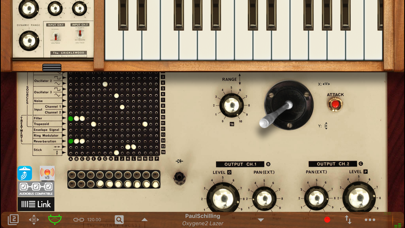
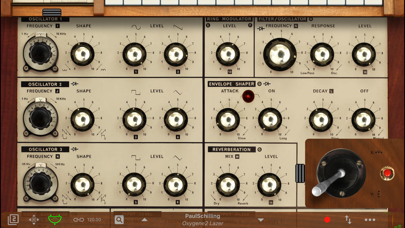
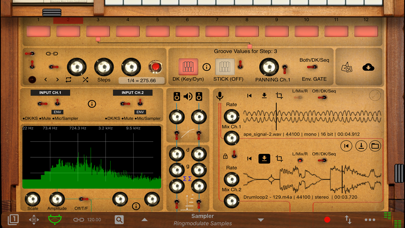
The VCS3 is equipped with three oscillators, including a Low Frequency Oscillator (LFO), which helps shape its sound. It also features a noise generator, two input amplifiers, and a ring modulator. Additionally, the synthesizer incorporates a voltage controlled filter (VCF) that can operate at either 18dB/octave or 24dB/octave, depending on the model year. The trapezoid envelope generator, along with the joy-stick controller and voltage controlled spring reverb, gives users a wide range of sound manipulation options. Two stereo output amplifiers ensure high-quality sound reproduction.
One of the unique aspects of the VCS3 is its patch board matrix. Unlike traditional modular synthesizers, which use cables to connect components, the VCS3 allows users to insert pins into the matrix to create connections. This setup encourages creativity and experimentation among users.
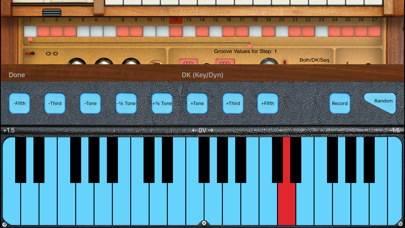
Although the VCS3 lacks a built-in keyboard, it can still be paired with external keyboard controllers for melodic play. The DK1 keyboard controller, introduced in 1969, was an early option that offered velocity-sensitive playability in a monophonic format. Its capabilities were later expanded in 1972 with the DK2 for duophonic play. In the same year, the Synthi AKS was launched, introducing a digital sequencer and a touch-sensitive flat keyboard called the KS sequencer, along with a mechanical keyboard version known as DKS.
For many musicians and sound designers, the VCS3 serves as an essential tool for sound effects generation. Its rich history includes notable contributions to the BBC Radiophonic Workshop, where it became a vital instrument for producing sound effects for shows like Doctor Who. The unique sounds of many of the show's iconic monsters and atmospheres came directly from the VCS3.
The iVCS3 emulator captures all of these features, allowing users to explore the oscillator functions in music, audio processing for bands, and the intricate art of electronic music composition. This makes it a valuable asset for anyone interested in historical synthesizer models and experimental music instruments. Whether you are a seasoned musician or just starting out, the iVCS3 offers a fascinating glimpse into the world of electronic music and the groundbreaking technology that shaped it.
This synthesizer gained immense popularity among progressive rock bands. It found its way into recordings by various artists, including The Alan Parsons Project, Jean Michel Jarre, Hawkwind, Brian Eno (who worked with Roxy Music), King Crimson, The Who, Gong, and Pink Floyd. For instance, the iconic track "Won't Get Fooled Again" by The Who featured the VCS3 as an external sound processor, showcasing its impressive filtering and oscillator capabilities. In Pink Floyd's "On the Run," the VCS3 helped create unique soundscapes, contributing to the album "The Dark Side of the Moon." Their song "Welcome to the Machine" also relied heavily on the VCS3, highlighting its ability to generate bassy sounds and complex audio layers.
The VCS3 is equipped with three oscillators, including a Low Frequency Oscillator (LFO), which helps shape its sound. It also features a noise generator, two input amplifiers, and a ring modulator. Additionally, the synthesizer incorporates a voltage controlled filter (VCF) that can operate at either 18dB/octave or 24dB/octave, depending on the model year. The trapezoid envelope generator, along with the joy-stick controller and voltage controlled spring reverb, gives users a wide range of sound manipulation options. Two stereo output amplifiers ensure high-quality sound reproduction.
One of the unique aspects of the VCS3 is its patch board matrix. Unlike traditional modular synthesizers, which use cables to connect components, the VCS3 allows users to insert pins into the matrix to create connections. This setup encourages creativity and experimentation among users.
Although the VCS3 lacks a built-in keyboard, it can still be paired with external keyboard controllers for melodic play. The DK1 keyboard controller, introduced in 1969, was an early option that offered velocity-sensitive playability in a monophonic format. Its capabilities were later expanded in 1972 with the DK2 for duophonic play. In the same year, the Synthi AKS was launched, introducing a digital sequencer and a touch-sensitive flat keyboard called the KS sequencer, along with a mechanical keyboard version known as DKS.
For many musicians and sound designers, the VCS3 serves as an essential tool for sound effects generation. Its rich history includes notable contributions to the BBC Radiophonic Workshop, where it became a vital instrument for producing sound effects for shows like Doctor Who. The unique sounds of many of the show's iconic monsters and atmospheres came directly from the VCS3.
The iVCS3 emulator captures all of these features, allowing users to explore the oscillator functions in music, audio processing for bands, and the intricate art of electronic music composition. This makes it a valuable asset for anyone interested in historical synthesizer models and experimental music instruments. Whether you are a seasoned musician or just starting out, the iVCS3 offers a fascinating glimpse into the world of electronic music and the groundbreaking technology that shaped it.

NoInputMixer
Igor Vasiliev
$15.99
$9.99

Elastic Melody
Oliver Greschke (DE)
$14.99
$8.99

Zeeon synth
BeepStreet
$14.99
$6.99