
Best AppSumo Alternatives for Indie Developers (2026)
In 2026, building an app is easier than ever—getting discovered is the hard part. Here are the best AppSumo alternatives for indie developers, plus a practical checklist to choose the right platform for your growth goals.
and launch functional mobile apps, SaaS products, and developer tools faster than ever. What once required a full team can now be done by a single person.But after launch, the same problem appears—every time.
AI has dramatically lowered the barrier to building software. A 2025 report from Carta shows that solo-founded startups accounted for 36.3% of new companies in the first half of the year, reflecting how falling technical barriers are enabling individuals to build and launch serious products on their own.
No matter how polished the product is, growth doesn’t happen without distribution, visibility, and user discovery. And for most indie developers, marketing budgets are limited or nonexistent.
Statista data shows that the number of mobile apps and SaaS products entering the market continues to grow year over year, making discovery—not development—the real bottleneck for indie developers in 2026.
That’s exactly why platforms like AppSumo became popular in the first place.
Key Takeaways
- Building apps is easy in 2026.
- Getting discovered is still hard.
- AppSumo works, but not for every app.
- Discounts are often required for visibility.
- Discovery platforms help indie developers grow.
Why AppSumo Became the Default Launch Platform
AppSumo didn’t dominate the indie software and early-stage SaaS space by accident. For years, it solved one of the hardest problems for new founders: distribution.
Unknown apps, built by solo developers, bootstrapped teams, and first-time founders—suddenly had access to a massive audience that was already primed to buy. AppSumo’s users weren’t casual browsers. They were actively searching for discounted software deals, lifetime deals (LTDs), and promising new SaaS tools they could try before everyone else.
For early-stage founders, offering a discount wasn’t really about pricing. It was about visibility. When you didn’t have a mailing list, ad budget, or brand recognition, a deal platform like AppSumo acted as a shortcut.
It replaced months of marketing with instant exposure. Many indie SaaS founders used it to:
- Validate product-market fit
- Collect early user feedback
- Generate initial revenue
- Prove demand to investors or partners
And for a long time, that approach worked.
But as the indie ecosystem matured and the number of SaaS tools exploded—especially after AI made software development more accessible—developers began to notice something important.
The platform you launch on doesn’t just bring users. It shapes expectations, behavior, and long-term growth.
Users coming from a lifetime deal marketplace often behave very differently from users coming through organic search, content marketing, or curated discovery platforms.
Their expectations around pricing, support, and product evolution are shaped by the platform itself. By 2026, this distinction matters more than ever.
With thousands of new apps launching every year and attention becoming increasingly fragmented, indie developers are realizing that where they launch can influence:
- User quality
- Retention
- Monetization models
- Product roadmap decisions
That realization is exactly why more founders are now exploring AppSumo alternatives instead of treating it as the default option.
The Real Challenge Isn’t Discounts — It’s Alignment
Discounts are not the problem.
In fact, deal platforms, software marketplaces, and discount websites exist for a simple reason: users expect discounted apps. Subscribers don’t browse these platforms to analyze long-term pricing models. They come looking for immediate value, price drops, and limited-time deals on SaaS tools, mobile apps, and productivity software.
For indie developers, discounts are often the entry point to attention.
When you don’t have a brand, an audience, or a marketing budget, offering a deal becomes the fastest way to compete with established products. In crowded categories like SaaS, developer tools, and AI-powered apps, visibility usually comes before loyalty.
The real challenge isn’t discounts.
It’s alignment.
Over time, many indie developers begin to notice trade-offs that aren’t obvious at launch:
- High support volume with low customer lifetime value (LTV), especially when users expect ongoing updates for a one-time payment
- Feature requests driven by deal expectations, rather than long-term product vision
- Difficulty transitioning from lifetime deals to subscription pricing, particularly when early users resist recurring fees
- Slower long-term revenue growth, even as the user base increases
These issues don’t mean the launch failed. They reflect a distribution decision.
Every platform brings a different type of user, with different expectations around pricing, support, and product evolution. Users acquired through lifetime deal platforms often behave very differently from users acquired through organic search, content marketing, or curated discovery platforms.
And in a crowded 2026 app marketplace—where thousands of new indie apps and AI-driven tools launch every year—those early distribution choices don’t fade away.
- They compound.
- They influence retention.
- They shape monetization.
- They quietly steer your product roadmap.
What Changed for Indie App Promotion in 2026
The biggest shift isn’t technology.
It’s volume.
- More indie apps are being published than ever
- More AI-built software is competing for attention
- Discovery has become the real bottleneck
What hasn’t changed is the cost of promotion.
- Paid ads remain expensive
- Influencer marketing is unpredictable
- Building an audience organically still takes time
This is why discovery platforms, app marketplaces, and deal websites are still critical for indie developers in 2026. But instead of relying on one platform, founders are now exploring AppSumo alternatives.
This shift is why many founders now use multiple promotion channels instead of relying on a single launch platform. We cover these channels in detail in our guide to the Top Platforms to Promote Indie Apps in 2026.
How to Evaluate AppSumo Alternatives (Founder Checklist)
Before choosing any alternative, ask these questions:
- Who is the platform’s audience—buyers or long-term users?
- Is visibility temporary or ongoing?
- Are discounts required, and on what terms?
- Can the platform support growth beyond launch?
- Is it accessible for solo founders and bootstrapped teams?
There’s no universal “best” platform—only the best fit for your goals.
Best AppSumo Alternatives for Indie Developers in 2026
1. SEO and Content-Driven Promotion
- SaaS tools, where users research before subscribing
- Productivity apps, where comparisons and alternatives matter
- Developer utilities, where problem-specific searches drive high-quality traffic
Search-driven promotion also gives founders more control. You decide the messaging, the positioning, and the pricing—without being locked into platform rules or short-term campaigns.
The trade-off is patience.
SEO doesn’t deliver instant spikes. It takes time to rank, build authority, and earn trust with search engines. But for indie developers thinking beyond launch day, search-driven discovery often becomes the backbone of long-term growth.
In a crowded 2026 app ecosystem, this compounding effect is one of the few advantages that still scales without a large marketing budget.
2. Curated App Discovery Platforms
what problem it solves, and why it stands out.Curated platforms typically surface:
- Relevant tools that solve specific problems
- Targeted audiences already interested in those categories
- Better product–user fit, which improves engagement and retention
This model works especially well for indie SaaS, productivity apps, developer tools, and niche utilities, where the right user matters more than raw traffic numbers.
For many indie developers, curated discovery platforms outperform large marketplaces because they reduce noise. Instead of being one app among thousands, founders gain focused visibility in front of users who are already in discovery mode—and more likely to convert.
In a crowded 2026 app ecosystem, relevance often beats reach.
3. AppDovo – A Discovery Platform Built for Indie Apps
AI made app creation affordable. App promotion is still not.
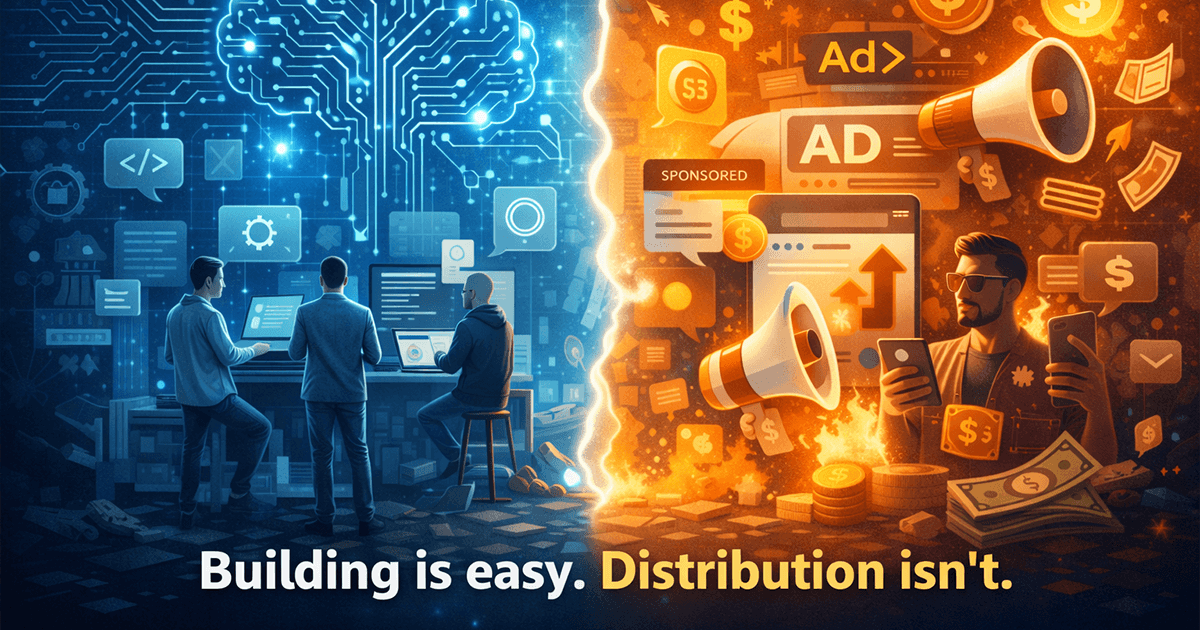
Today, indie developers can use AI-powered tools to build SaaS products, mobile apps, and developer utilities faster than ever.
Design, development, testing, and deployment have all become cheaper and more accessible. But when it comes to marketing, distribution, and user acquisition, very little has changed.
Paid advertising remains expensive. Influencer marketing is unpredictable. Building an audience from scratch takes time most new founders don’t have. This gap is exactly where AppDovo fits.
AppDovo connects indie developers with a 20,000+ subscriber audience of app lovers who actively look for discounted apps, software deals, and new indie products. These users aren’t casual visitors. They join specifically to discover apps that offer clear value through discounts.
In other words, discounts are not a side effect—they’re the expectation. For indie developers, this creates an opportunity. Instead of competing with well-funded companies through ads or brand recognition, founders can earn attention by offering a deal to a relevant audience that is already in discovery mode. What makes AppDovo different is not the idea of discounts—it’s the structure around them.
Key points to understand:
- Listing is currently free for indie developers, lowering the barrier to entry for new and
bootstrapped founders - Discounts are required, because subscriber demand drives the platform
- Terms are simpler and more flexible than many traditional deal platforms
- The focus is on ongoing discovery, not just short-lived launch-day spikes
This makes AppDovo especially useful for developers who want visibility without committing to aggressive or restrictive agreements.
Looking ahead, AppDovo may introduce paid options. But the intent is clear: any future pricing will be founder-friendly, transparent, and designed with an understanding that promotion is already one of the hardest and most expensive parts of building an indie app.
In a crowded 2026 app ecosystem, AppDovo aims to be a practical distribution layer—not a gatekeeper.
4. Newsletters, Communities, and Niche Deal Websites
- Higher trust, because recommendations feel curated rather than algorithmic
- Better engagement, with users more likely to read, click, and explore
- More relevant users, who understand indie products and their limitations
For indie developers, this often results in better conversations, more actionable feedback, and higher-quality early users—even if the total traffic is smaller. These channels are especially effective for bootstrapped founders, solo developers, and early-stage SaaS products that don’t have the budget to compete on paid ads or influencer marketing.
However, smaller audiences work best when they’re not used in isolation.
When paired with discovery platforms, newsletters and communities become amplification layers. Discovery platforms provide consistent visibility, while niche audiences
add trust and engagement. Together, they create a more balanced promotion strategy—one that combines reach with relevance.
In a saturated 2026 app ecosystem, this combination often outperforms relying on any single channel alone.
When AppSumo Still Makes Sense
Despite all the changes in the indie landscape, AppSumo is not obsolete. In fact, for certain use cases, it remains one of the most effective launch platforms
available to indie developers and early-stage SaaS founders.
AppSumo still works well when:
- You’re validating an MVP
If your product is early, incomplete, or still evolving, AppSumo can provide fast feedback from real users. Many founders use it as a form of large-scale user testing to validate demand before committing to long-term development. - Your product suits lifetime pricing
Tools with clear, one-time value—such as utilities, design tools, internal dashboards, or developer tools—often align naturally with lifetime deals (LTDs). - You need immediate exposure
When speed matters more than sustainability, AppSumo delivers visibility fast. For founders without an audience, email list, or SEO presence, this instant distribution is difficult to replicate. - You can handle increased support and expectations
AppSumo users are active. They ask questions, request features, and expect updates. Founders who plan for this tend to get more value from the platform.
Where founders run into trouble is not using AppSumo. It’s using AppSumo as their only distribution channel.
Relying on a single marketplace for growth creates long-term risk:
- Visibility drops once the deal ends
- Revenue becomes front-loaded
- Pricing flexibility decreases
- Growth slows without new channels
In a 2026 app ecosystem shaped by AI, saturation, and short attention spans, sustainable growth usually comes from combining platforms, not committing to just one.
A Smarter Indie App Promotion Strategy for 2026
Successful founders now use a stacked approach:
- One discovery platform
- One organic growth channel (SEO)
- One owned audience (email or community)
- Continuous user feedback
This reduces risk and builds long-term visibility.
Final Thought
In 2026, shipping an app is easy. Getting discovered isn’t.
Discounts are often necessary. Discovery platforms remain essential.
What matters is choosing platforms that align with your growth goals—and your stage as an indie developer.


